
Do you wake up tired even after a full night in bed? You are not alone. The Singapore Health Study found that around 30 per cent of adults here have moderate to severe obstructive sleep apnoea, and most have never been diagnosed. Often the problem is not too few hours of sleep, but how well you breathe while you sleep. If your partner has nudged you about loud snoring, or you wake up groggy, a dentist trained in sleep medicine may be able to help.
Quick answer
Yes. A dentist trained in dental sleep medicine can help treat snoring and mild to moderate sleep apnoea with a custom oral appliance, a small device worn at night that gently holds your lower jaw forward to keep your airway open. A sleep physician confirms the diagnosis first with a sleep study, and CPAP stays the first-line option for moderate to severe sleep apnoea. Singapore’s own 2025 national consensus sets out exactly this shared pathway between your doctor and your dentist.
Key takeaways
- Around 30.5% of Singaporean adults have moderate to severe obstructive sleep apnoea (AHI ≥15/hour), and 18.1% meet criteria for the full syndrome with daytime sleepiness (Singapore Health Study 2012, reported in Leow et al., 2025).
- A dentist treats snoring and sleep apnoea with a custom oral appliance, not surgery or medication.
- Singapore’s 2025 national consensus supports oral appliances for adults with OSA who refuse or cannot tolerate CPAP, and specifically in mild to moderate OSA where there are craniofacial or dentofacial features.
- A Singapore trial (CRESCENT, published in JACC 2024) found a mandibular advancement device was non-inferior to CPAP for lowering 24-hour blood pressure in patients with OSA and hypertension.
- A sleep study and a doctor’s diagnosis come first; your dentist then fits, adjusts and reviews the device, with follow-up sleep testing.
- Not everyone is suitable: you need enough healthy teeth and gums to hold the device, adequate forward jaw movement, and no active jaw joint disorder.
- At DP Dental we look for the root cause, including the breathing and oral habits behind disrupted sleep.
Could your snoring be sleep apnoea?
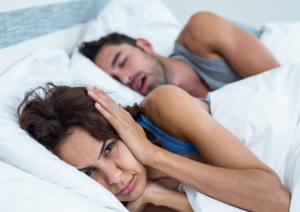
Snoring is common, and it is not always harmful. But loud, habitual snoring is one of the most common signs of obstructive sleep apnoea (OSA), a condition where your airway repeatedly narrows or closes while you sleep. Each time it does, your oxygen level dips and you stir briefly, often without knowing it, so your nights are broken even when you think you slept right through.
Worn-down teeth are another clue we see as dentists, because grinding often travels with disrupted breathing. Watch for these signs:
- Loud, habitual snoring, sometimes with choking or gasping
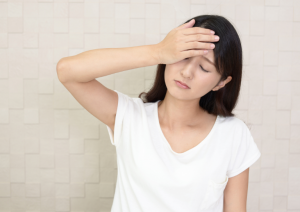
- Waking with a dry mouth or a morning headache
- Daytime sleepiness, poor concentration or irritability
- Teeth grinding (bruxism), which often goes hand in hand with disrupted breathing
Left unaddressed, sleep apnoea is associated with high blood pressure, higher rates of heart attack and stroke, low mood, accidents, and a poorer quality of life (Leow et al., 2025).
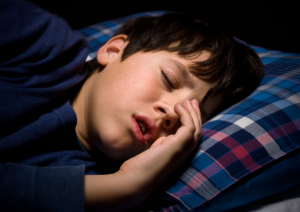
If you are a parent, watch your child’s sleep too. In children the signs look different: snoring, pauses or gasps, mouth breathing, restless sleep and odd sleeping positions, bedwetting, morning headaches, poor school performance, or behaviour that reads as irritability, hyperactivity or trouble paying attention (Leow et al., 2025). Childhood sleep apnoea affects an estimated 1% to 6% of children internationally, and one local study found 13.3% among children with obesity. It matters because untreated childhood OSA has been linked with stunted growth, effects on facial and jaw growth, and neurocognitive, behavioural and learning difficulties. If any of this sounds familiar, our overview of sleep apnoea treatment in Singapore is a good next read.
How can a dentist treat snoring and sleep apnoea?
A dentist trained in sleep medicine treats snoring and mild to moderate sleep apnoea with a custom oral appliance, also called a mandibular advancement device (MAD). Worn like a sports mouthguard, it moves your lower jaw, the hyoid bone and the attached muscles and soft tissues into a forward position. That increases the space in your throat and keeps the tongue, soft palate and submental muscles more active during sleep, so the airway is less likely to collapse (Leow et al., 2025).
The devices we use, such as SomnoDent Avant and ProSomnus EVO, are custom-made and adjustable, not the over-the-counter boil-and-bite guards you can buy online. That matters: the Singapore consensus, like the American Academy of Sleep Medicine and American Academy of Dental Sleep Medicine, describes customised, adjustable appliances fitted and titrated by a qualified dentist.

Oral appliance therapy is an appropriate treatment for mild and moderate sleep apnoea, and severe sleep apnoea when the patient does not tolerate CPAP. (American Dental Association, 2019)
Are you a suitable candidate?
Not everyone is. The Singapore consensus is clear that suitability rests on three things: enough healthy teeth and gum support to retain the device, adequate protrusive jaw function, and the absence of a temporomandibular (jaw joint) disorder (Leow et al., 2025). This is part of what a dental assessment is for, and it is a reason not to order a device online. Where there is jaw joint strain, we would want to address that first rather than load an unstable joint every night.
Oral appliance or CPAP: which is right for you?
CPAP is the first line, gold standard treatment for moderate to severe OSA, and an oral appliance is the leading alternative for milder cases or for people who cannot get on with CPAP. Singapore’s 2025 consensus recommends oral appliances over no therapy for adults who refuse or cannot tolerate CPAP, and supports their use as adjunctive treatment in mild to moderate OSA where there are craniofacial or dentofacial features.
Clinical trials show that customised oral appliances reduce the number of breathing pauses per hour, improve daytime sleepiness and quality of life, and help blood pressure in mild to moderate OSA, with high acceptability and good self-reported nightly use (Leow et al., 2025). One local finding is worth knowing about: in the Singapore CRESCENT trial, a mandibular advancement device was non-inferior to CPAP for lowering 24-hour blood pressure in patients with OSA, hypertension and raised cardiovascular risk (Ou et al., J Am Coll Cardiol, 2024).
The real trade-off is effectiveness against comfort. CPAP lowers the number of breathing pauses more, but it only helps if you wear it: across twenty years of data, about 34% of CPAP users did not stick with it, and average nightly use stayed flat at roughly 4.5 hours (Rotenberg et al., 2016). A device you actually wear every night can do more for you than a more powerful one that ends up in the cupboard.
| Consideration | Oral appliance (MAD) | CPAP |
|---|---|---|
| How it works | Moves the lower jaw, hyoid and tongue forward to open the throat and reduce airway collapse | Pumps pressurised air through a mask to splint the airway |
| Best suited to | Snoring, mild to moderate sleep apnoea, craniofacial or dentofacial features, or CPAP-intolerant patients | Moderate to severe sleep apnoea (first line) |
| Effectiveness | Reduces breathing pauses and daytime sleepiness; non-inferior to CPAP for 24-hour blood pressure in one Singapore trial | Reduces the breathing-pause count the most; the clinical benchmark |
| Suitability | Needs healthy teeth and gums, adequate forward jaw movement, and no jaw joint disorder | No dental requirements |
| Comfort and wear | Small and quiet, no machine or mask; easier for many to wear nightly | Very effective when used, but roughly a third of users do not keep it up |
| Travel | Pocket-sized, needs no power | Needs the machine and a power source |
Do I need a sleep study first, and who diagnoses sleep apnoea?
Yes, the diagnosis comes first, and your dentist does not make it. Sleep apnoea is diagnosed by a sleep physician using a sleep study, either an overnight test in a lab (polysomnography) or a validated home sleep apnoea test. The Singapore consensus is explicit that these studies should only be ordered under the guidance of a medical or dental professional with the appropriate training.
Think of it as a team, and that is deliberate. Singapore’s consensus panel was convened across respiratory physicians, ENT surgeons, paediatricians and dentists precisely because managing OSA well needs more than one discipline. The sleep physician diagnoses and prescribes, a qualified dentist fits and titrates the device, and a follow-up sleep study confirms it is working. The consensus recommends that follow-up testing be done once jaw advancement and symptom relief are judged adequate by the dentist and/or sleep physician. As dentists we are often the first to spot the signs, so do not be surprised if we ask about your sleep, but the formal diagnosis stays with your doctor.
What does treatment at DP Dental involve?
We aim to get to the root cause, not just quieten the noise. After your sleep physician confirms the diagnosis, we assess your airway, jaw, teeth and gums, and check that you are a suitable candidate, often with 3D imaging, then take a digital scan for a custom device. The appliance is advanced gradually over several weeks to find the position that controls your symptoms comfortably, and a follow-up sleep study with the device in place confirms it is working.
What makes our approach different is that we also look at the habits behind the problem. Sleep trouble often begins with mouth breathing, when the tongue rests low instead of against the roof of the mouth. Persistent mouth breathing is a recognised marker of abnormal respiratory function, and myofunctional therapy retrains normal chewing, swallowing, tongue position and nasal breathing with the lips closed at rest (Ng et al., APPS position statement, 2017). Singapore’s consensus lists myofunctional therapy as a treatment or adjunct for mild to moderate OSA in children, and a meta-analysis it cites reported that myofunctional therapy reduced the number of breathing pauses per hour by over 40% in children with mild to moderate disease.
As Dr Yue Weng Cheu puts it, “Breathe better during the day so that you can breathe better at night, for good sleep.” The habit we teach is simple: tongue up, lips closed, and breathe through your nose. Because grinding and jaw tension often travel with this, we may also check for jaw joint strain and bruxism, and children are assessed through myofunctional therapy for mouth breathing and snoring and growth guidance rather than an adult jaw device.
A note on children
Children are managed differently, and adenotonsillectomy is usually the first surgical consideration where the tonsils and adenoids are enlarged. Where a child has a narrow or set-back upper or lower jaw, both the Singapore consensus and the APPS position statement note that orthodontic growth guidance may be considered by trained dental specialists as part of interdisciplinary care, ideally at or before puberty, with long-term follow-up and sleep monitoring. Rapid maxillary expansion and paediatric mandibular advancement have both been reported to reduce the number of breathing pauses per hour in selected children (Ng et al., 2017). This is always alongside the paediatrician or ENT surgeon, never instead of them.
Is an oral appliance safe, and what are the trade-offs?
An oral appliance is generally well tolerated, and most side effects are mild and short-lived. Early on, some people notice extra saliva, a dry mouth, or tenderness in the teeth or jaw, which usually settles within a few weeks.
Over the longer term, the Singapore consensus asks that patients be made aware of minor tooth movement, changes to the bite, and the possibility of jaw joint symptoms with sustained use (Leow et al., 2025; primary source Tsolakis et al., 2022). Reported minor tooth movement is in the order of 0 to 3 millimetres over about two years (NDCS, 2025). This is manageable and it is why regular review matters: the consensus states plainly that regular follow-up and management of side effects are essential to keep the therapy both tolerable and effective.
We will also be honest that it does not work for everyone. Some people see little or no reduction in their sleep apnoea, which is exactly why the follow-up sleep study matters: it tells us whether the device is working for you. An oral appliance manages sleep apnoea while you wear it, it does not change the underlying airway, so it is used nightly on an ongoing basis rather than as a one-time fix.
Why is it worth treating?
Treating sleep apnoea can lift the daytime fog and may ease the strain that untreated apnoea places on your heart and blood pressure. Untreated OSA is associated with hypertension, higher rates of heart attack and stroke, depression, accidents and impaired quality of life (Leow et al., 2025). Untreated sleep apnoea is linked with a higher risk of high blood pressure, and treatment is linked with lower risk in long-term studies (Marin et al., JAMA, 2012). In one long-term study, untreated obstructive sleep apnoea was linked with close to double the risk of stroke or death from any cause, even after accounting for blood pressure, age, weight and smoking (Yaggi et al., New England Journal of Medicine, 2005).
For most people, though, the change they notice first is simpler: sleeping through the night, waking clearer, and letting their partner sleep too. That daily difference, alongside the longer-term health picture, is why getting your sleep properly assessed is worth it.
Frequently asked questions
Is loud snoring always sleep apnoea?
No. Many people snore without having sleep apnoea. But loud, habitual snoring, especially with choking, gasping, or witnessed pauses in breathing, is a common sign and is worth investigating with a sleep study. It is worth taking seriously locally, because around 30% of Singaporean adults have moderate to severe obstructive sleep apnoea and most are undiagnosed (Leow et al., Ann Acad Med Singap, 2025).
Am I a suitable candidate for an oral appliance?
It depends on your teeth, your jaw and your joints. Singapore’s 2025 consensus sets out three requirements: enough healthy teeth and gum support to hold the device, adequate forward movement of the lower jaw, and no temporomandibular joint disorder. We check all three at your assessment, and if a jaw joint problem is present we would usually want to settle that first.
Can I just buy a snoring mouthguard online?
It is not the recommended route for sleep apnoea. Over-the-counter boil-and-bite guards are not custom-fitted or adjustable, and both Singapore and international guidance describe a customised, adjustable device fitted by a qualified dentist. A poorly fitted device can be uncomfortable, less helpful, and may move your teeth in unwanted ways. It also skips the candidacy check above.
Does an oral appliance get rid of sleep apnoea for good?
No. An oral appliance controls snoring and sleep apnoea while you wear it, rather than changing the underlying anatomy, so it is worn every night on an ongoing basis. Its success is confirmed with a follow-up sleep study, and we review it over time to keep it working.
Will an oral appliance work as well as CPAP?
It depends on the severity and on what you are measuring. CPAP lowers the number of breathing pauses the most and is first line for moderate to severe sleep apnoea. For milder cases, or for people who cannot tolerate CPAP, an oral appliance is an effective alternative. Notably, a Singapore trial found a mandibular advancement device was non-inferior to CPAP for lowering 24-hour blood pressure in patients with OSA and hypertension (Ou et al., JACC, 2024), and many people wear an appliance more consistently because it is smaller and quieter.
My child snores. Does he need a jaw device?
No. Children are managed differently. Snoring in a child is assessed with a paediatrician or ENT surgeon first, and enlarged tonsils and adenoids are usually the first thing considered. Where a child has a narrow or set-back jaw, growth guidance and myofunctional therapy may be considered as part of interdisciplinary care, ideally at or before puberty. Weight management also matters where a child is overweight.
How long does it take to get used to the device?
Most people adjust over a few weeks. Because the device is advanced gradually, any jaw or tooth tenderness is usually mild and short-lived, and we fine-tune the position at your review visits until it is comfortable and working.
Is oral appliance therapy claimable under Medisave or insurance in Singapore?
Generally, no. Medisave does not cover a custom oral appliance for sleep apnoea, because it is treated as an outpatient dental device rather than a surgical procedure under MOH’s Table of Surgical Procedures. Some surgical treatments for sleep apnoea, such as jaw or soft-palate surgery, can be Medisave-claimable when done as day surgery, subject to the usual withdrawal limits, and private insurance varies by plan. Because what you can claim depends on your diagnosis and treatment plan, it is best to check with us or CPF Board before you start, and we are happy to walk you through the fees at your consultation.
Talk to us
If snoring or restless sleep is affecting you or your partner, we are here to help, and you do not have to suffer in silence. Arrange a comprehensive screening with a dentist trained in sleep medicine at DP Dental. Book a consultation and our team will help you arrange a visit.
Dr Yue Weng Cheu trained in dental sleep medicine at Tufts University, Boston, with a special interest in tongue and breathing retraining for better sleep.
Key references
- Leow LC, Lee CP, Venkateswaran S, et al. Singapore consensus statements on the management of obstructive sleep apnoea. Ann Acad Med Singap. 2025;54(10):627–643. doi:10.47102/annals-acadmedsg.2025153
- Ng DKK, et al. The Asian Paediatric Pulmonology Society (APPS) position statement on childhood obstructive sleep apnoea syndrome. Pediatr Respirol Crit Care Med. 2017;1(2):26–38.
- Ou YH, Colpani JT, Cheong CS, et al. Mandibular Advancement vs CPAP for Blood Pressure Reduction in Patients With Obstructive Sleep Apnoea. J Am Coll Cardiol. 2024;83:1760–1772.
- Tan A, Cheung YY, Yin J, et al. Prevalence of sleep-disordered breathing in a multiethnic Asian population in Singapore. Respirology. 2016;21(5):943–950. PubMed
- Ramar K, et al. Clinical Practice Guideline for the Treatment of Obstructive Sleep Apnoea and Snoring with Oral Appliance Therapy: An Update for 2015 (AASM and AADSM). J Clin Sleep Med. 2015;11(7):773–827. PubMed
- Tsolakis IA, Palomo JM, Matthaios S, et al. Dental and Skeletal Side Effects of Oral Appliances Used for the Treatment of Obstructive Sleep Apnoea and Snoring in Adult Patients: A Systematic Review and Meta-Analysis. J Pers Med. 2022;12:483.
- Sheats RD. Management of side effects of oral appliance therapy for sleep-disordered breathing: summary of AADSM recommendations. J Clin Sleep Med.
- American Dental Association. The Role of Dentistry in the Treatment of Sleep-Related Breathing Disorders (policy statement). 2019. ADA
- National Dental Centre Singapore. Dental Devices for Obstructive Sleep Apnoea. 2025. NDCS
- Rotenberg BW, et al. Trends in CPAP adherence over twenty years of data collection. J Otolaryngol Head Neck Surg. 2016. PMC
- Marin JM, et al. Association between treated and untreated obstructive sleep apnoea and incident hypertension. JAMA. 2012;307(20):2169–2176. PMC
- Yaggi HK, et al. Obstructive sleep apnoea as a risk factor for stroke and death. N Engl J Med. 2005;353(19):2034–2041. PubMed